Choosing the right website platform has become one of the most important decisions for modern businesses. A website is no longer just an online presence — it directly impacts branding, user experience, SEO performance, scalability, and long-term business growth.
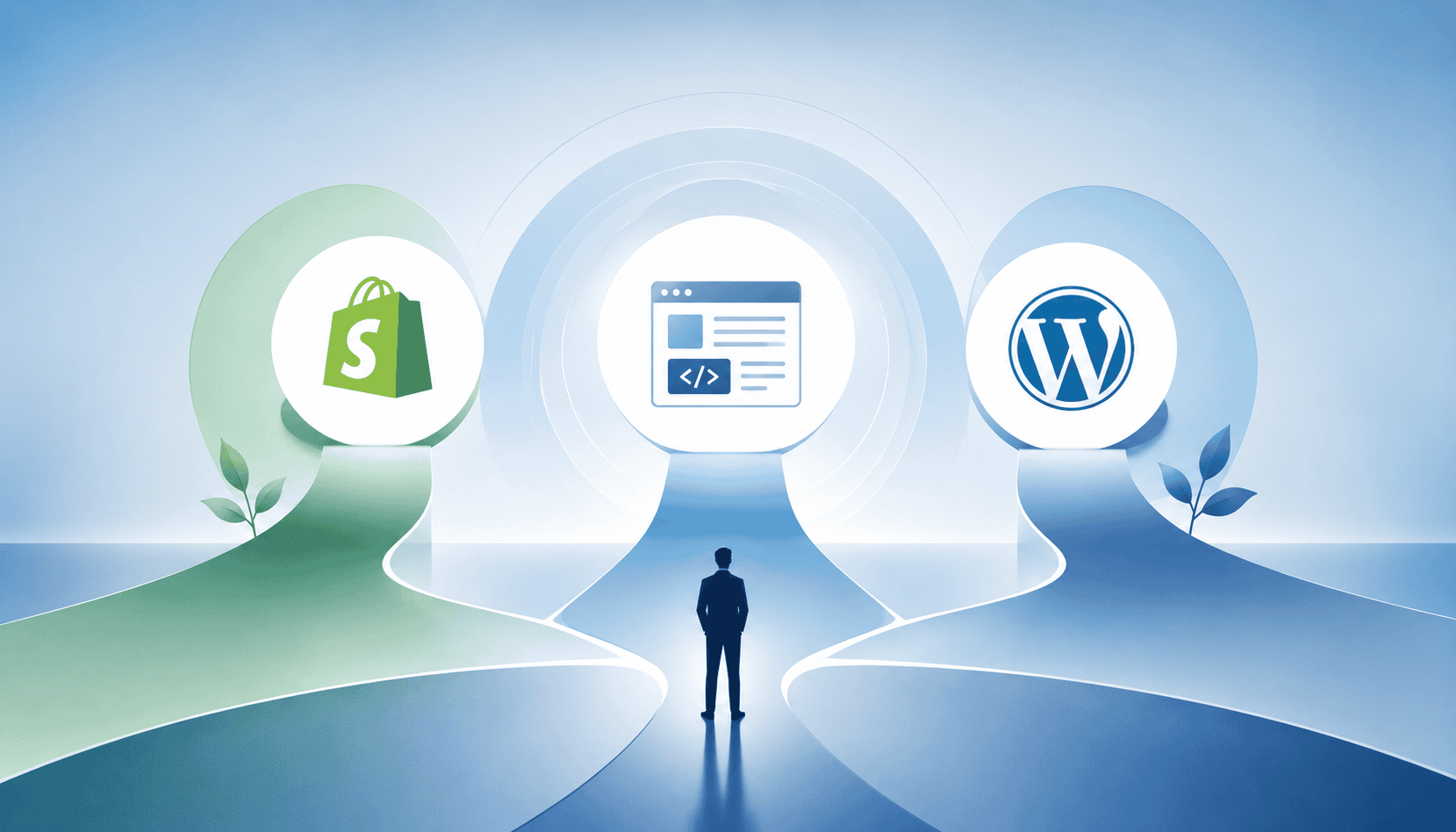
Today, most businesses choose between Shopify, WordPress, or fully custom website development depending on their goals and requirements.
Each platform offers different advantages, limitations, and levels of flexibility. The right choice depends on your business model, growth plans, content strategy, and branding needs.
Understanding the Difference Between Shopify, WordPress, and Custom Development
Before choosing a platform, it is important to understand what each solution is designed for.
Shopify is mainly focused on eCommerce businesses and online stores. WordPress offers flexibility for content-driven websites and business websites, while custom development provides complete freedom for brands that need advanced functionality and unique digital experiences.
At ThinkLab Communications , businesses often ask which platform is best for branding, scalability, SEO, and future growth.
- Shopify → Best for fast eCommerce setup
- WordPress → Best for flexibility and content-driven websites
- Custom Development → Best for scalability and unique business requirements
💡 Insight: Choosing a website platform should depend on long-term business goals, not just short-term convenience.
Why Many Businesses Choose Shopify
Shopify has become one of the most popular eCommerce platforms because it allows businesses to launch online stores quickly and manage products easily.
For startups and small businesses, Shopify provides:
- Easy store management
- Built-in payment systems
- Fast setup process
- Reliable hosting and security
- Simple inventory management
However, as businesses grow, some brands begin to face limitations related to advanced customization, flexibility, and performance optimization.
This is why many growing brands eventually look for more flexible solutions that support stronger branding and unique user experiences.
Businesses focused heavily on branding often combine Shopify with strong design and branding strategies to stand out in competitive markets.
Why Businesses Still Prefer WordPress
WordPress continues to power a large percentage of websites globally because of its flexibility and content management capabilities.
Unlike Shopify, WordPress is not limited to eCommerce. Businesses can build:
- Corporate websites
- Blogs and media platforms
- Portfolio websites
- Service-based business websites
- Custom eCommerce experiences
WordPress also offers strong SEO flexibility, making it a preferred option for businesses focused on content marketing and organic traffic growth.
Many businesses working on long-term digital visibility integrate WordPress with communication strategies and content-driven branding.
However, WordPress websites often require better maintenance, plugin management, and performance optimization compared to fully hosted platforms like Shopify.
Why Custom Development Is Growing Fast
Custom website development gives businesses complete control over design, performance, functionality, and scalability.
Unlike template-based platforms, custom development allows brands to create unique digital experiences tailored specifically to their business goals.
This is becoming increasingly important for businesses that require:
- Advanced integrations
- Scalable infrastructure
- Unique branding experiences
- Custom dashboards or portals
- High-performance web applications
Custom development also allows businesses to improve loading speed, SEO structure, and user experience without being limited by themes or third-party plugin restrictions.
Modern businesses increasingly combine custom development with AI-driven digital experiences and advanced communication strategies to create stronger online engagement.
Which Platform Is Best for SEO?
SEO performance depends more on website structure, speed, content quality, and user experience than the platform itself.
However, WordPress and custom-developed websites usually offer more technical SEO flexibility compared to closed platforms.
Businesses that invest in strong website structure, optimized performance, and high-quality content often achieve better long-term visibility regardless of the platform they choose.
According to Google Search Central , website performance and user experience continue to play a major role in search rankings.
The right platform should support both business growth and customer experience.
A visually attractive website means very little if it cannot scale, perform, or communicate effectively.
Conclusion
Shopify, WordPress, and custom development all offer different advantages depending on the needs of a business.
Shopify is ideal for fast eCommerce setup, WordPress provides flexibility and strong content management, while custom development offers scalability and complete creative control.
The best choice depends on your business goals, branding strategy, growth plans, and digital requirements.
If you are planning your next website project, explore our recent work or start a conversation .