

The Psychology Behind Why We Remember Stories, Not Advertisements
The Psychology Behind Why We Remember Stories, Not Advertisements The Psychology Behind Why We Remember Stories, Not Advertisements Every day we encounter thousands of marketing messages. Most disappear within seconds. Yet years later we still remember a moving film, a childhood story, or a brand campaign that made us laugh or cry. The difference isn’t the size of the budget—it’s the psychology of storytelling. Facts inform.Stories stay with us. Why the Human Brain Loves Stories Stories activate multiple parts of the brain at once. Instead of processing isolated facts, the brain follows characters, conflict, emotion, and resolution. This creates richer mental associations, making information easier to remember. Stories create emotional engagement. They provide context instead of isolated facts. Narratives help people understand complex ideas. Stories encourage empathy and imagination. People naturally retell stories they remember. Insight The brain rarely remembers information on its own. It remembers experiences wrapped in emotion. Emotion Creates Memory Emotion strengthens memory. Campaigns that inspire hope, curiosity, surprise, pride, or empathy are more likely to stay with audiences than feature-heavy advertisements. This is why storytelling consistently outperforms purely promotional messaging. Emotion is remembered.Information is forgotten. Why Traditional Advertisements Are Forgotten Many advertisements focus on features, specifications, and discounts. While these details can be useful, they rarely create an emotional connection. Story-driven brands instead focus on transformation, purpose, and people. Advertisement Story Tells Shows Promotes Connects Interrupts Engages Features Emotion Short attention Long-term memory How Great Brands Use Storytelling Brands such as Apple, Nike, Airbnb, and Dove rarely begin with product specifications. They communicate identity, aspiration, and purpose. Customers remember how these brands make them feel, not simply what they sell. Combining Video Solutions, Design & Branding, and Communication Strategies helps transform information into memorable experiences. The Storytelling Formula Emotion → Connection → Trust → Memory → Action Tell Stories People Remember At ThinkLab Communications, we combine strategy, creativity, and storytelling psychology to help brands build lasting emotional connections that audiences remember long after the advertisement ends. Start a Conversation Conclusion The most successful brands do more than capture attention—they earn a place in memory. In a world overflowing with content, stories remain the most powerful way to build trust, inspire action, and create meaningful relationships. Brands that understand the psychology of storytelling will always have an advantage over those that simply advertise.

Can AI Understand Emotion? What Brands Need to Know
Can AI Understand Emotion? What Brands Need to Know Artificial intelligence can write headlines, generate visuals, edit videos, personalise campaigns, and even create entire marketing concepts within minutes. But as AI becomes more involved in the creative process, one important question continues to shape the future of branding: Can AI truly understand emotion? While AI is incredibly effective at recognising patterns, analysing behaviour, and predicting engagement, authentic storytelling is built on empathy, lived experiences, intuition, and human connection. The brands that will succeed in the AI era won’t replace creativity with technology—they’ll combine intelligent automation with genuine human insight. AI can analyse emotions. People create them. What AI Does Best Artificial intelligence excels at processing massive amounts of information. It can analyse customer behaviour, identify trends, generate creative ideas, improve workflows, and personalise experiences faster than any human team. Today’s creative agencies use AI to speed up production—not replace creativity. From concept generation to video editing, AI allows teams to spend less time on repetitive work and more time crafting meaningful stories. Creative ideation and brainstorming Script generation and refinement Storyboarding and visual planning Video editing assistance Audience behaviour analysis Content optimisation across platforms 💡 Insight AI doesn’t experience happiness, fear, excitement, or empathy. It predicts emotional responses using data collected from millions of human interactions. Where Human Creativity Still Wins Emotion cannot be automated. The stories people remember are shaped by culture, intuition, relationships, memories, vulnerability, and real-life experiences. These qualities allow brands to connect with audiences on a deeply personal level. While AI can generate hundreds of campaign ideas, humans understand which story deserves to be told—and why it matters. Technology creates efficiency. Emotion creates loyalty. AI vs Human Emotion Artificial Intelligence Human Creativity Analyses data Creates meaning Predicts behaviour Builds trust Generates content Creates experiences Optimises speed Builds relationships Learns from data Learns from life AI improves efficiency. Human creativity builds unforgettable brands. Why Storytelling Still Matters Great storytelling isn’t just about sharing information—it’s about making people feel something. AI can support the creative process, but emotional storytelling still requires empathy, strategic thinking, and authentic human experiences. Explore our AI Production, Video Solutions, and Design & Branding services to discover how technology and creativity work together. The Winning Formula Human Insight + AI Intelligence + Strategic Storytelling = Brands People Trust Build Stories That Feel Human Artificial intelligence can accelerate production, but meaningful storytelling still begins with people. At ThinkLab Communications, we combine AI-powered creativity with strategic storytelling to create brands that inspire trust, emotion, and long-term growth. Start a Conversation Conclusion The question isn’t whether AI can understand emotion. The real question is whether brands can use AI without losing the human connection that makes stories memorable. The future belongs to organisations that embrace intelligent technology while protecting the creativity, empathy, and authenticity that only people can bring.
How Businesses Can Use AI Without Losing Their Brand Voice
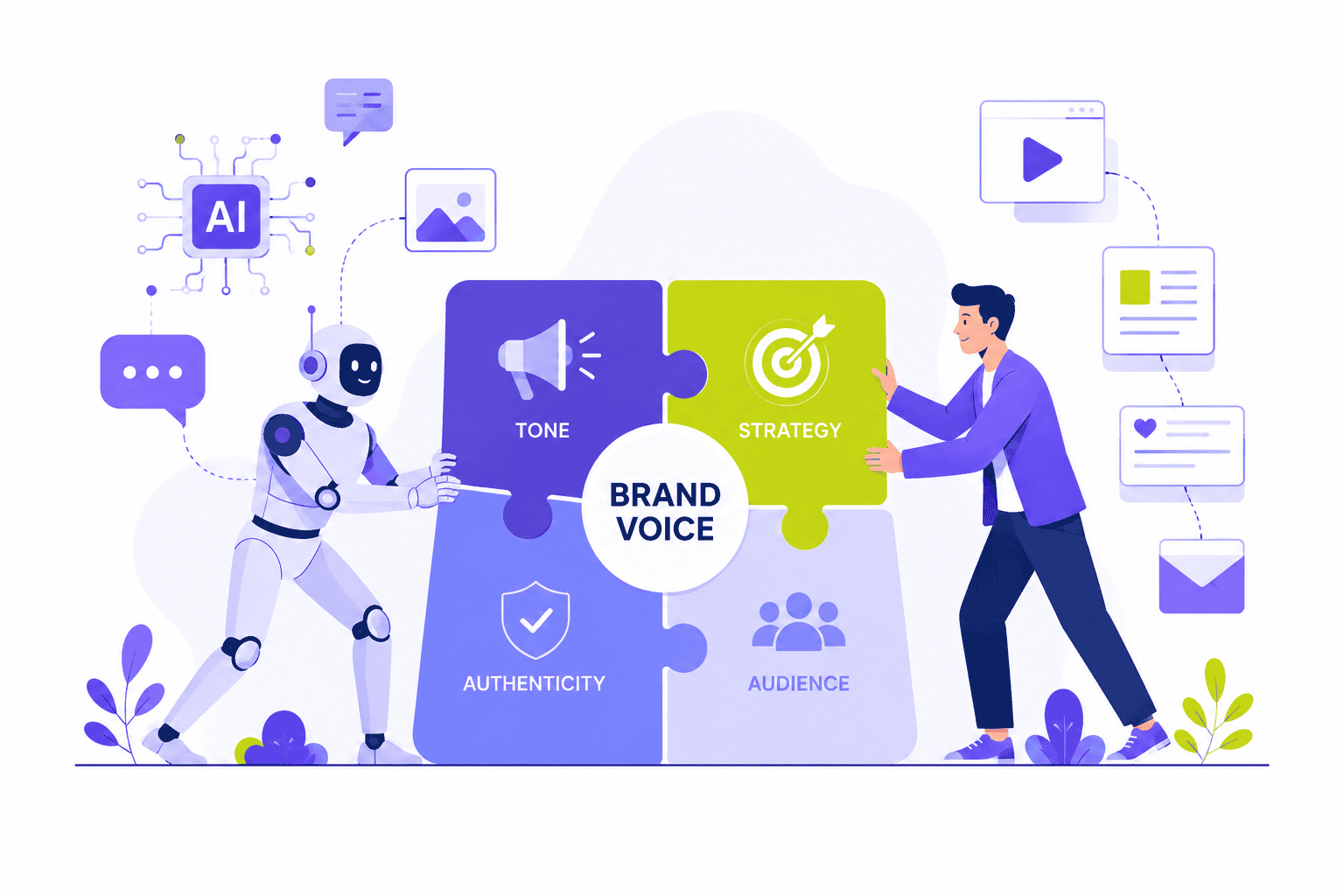
Artificial Intelligence is transforming the way businesses create content, manage campaigns, and communicate with audiences. From generating blog ideas and social media captions to producing videos and marketing assets, AI has become an important tool for modern brands. However, as more businesses adopt AI, a new challenge is emerging. How can brands use AI efficiently without sounding generic, robotic, or disconnected from their identity? The answer lies in maintaining a strong brand voice. While AI can support content creation, businesses must ensure their communication remains authentic, consistent, and aligned with their values. AI can create content faster. Your brand voice is what makes that content meaningful. Why Brand Voice Matters More Than Ever A brand voice is the unique personality and communication style that helps audiences recognize and connect with a business. It influences how brands speak across websites, social media, videos, campaigns, and customer interactions. In a digital environment increasingly filled with AI-generated content, a consistent brand voice becomes a powerful differentiator. At ThinkLab Communications , we believe that strong brands are built through consistent communication, not just content production. Builds audience trust Strengthens brand recognition Creates emotional connection Improves communication consistency Supports long-term brand growth 💡 Insight: Customers remember how a brand communicates long before they remember the tools used to create the content. The Risk of Relying Too Heavily on AI AI can generate content quickly, but speed does not always equal quality. Many businesses make the mistake of publishing AI-generated content without editing, refining, or aligning it with their brand guidelines. This often leads to content that feels generic and lacks personality. Audiences can quickly recognize when content feels disconnected from a brand’s identity. Inconsistent messaging Loss of brand personality Reduced audience trust Generic communication Weaker brand differentiation The goal is not to sound like AI. The goal is to use AI while still sounding like your brand. How Businesses Can Use AI Effectively The most successful businesses treat AI as a support tool rather than a replacement for strategy and creativity. AI works best when it helps teams improve efficiency while human expertise guides the final communication. Businesses can use AI for: Content research Content planning Idea generation Content optimization Workflow automation However, brand messaging, storytelling, creative direction, and communication strategy should always involve human oversight. This is why businesses increasingly combine AI tools with communication strategies that keep messaging aligned with brand values. Why Human Creativity Still Matters AI can analyze data and generate content patterns, but it cannot fully understand human emotion, cultural context, or brand nuance. The strongest campaigns are still built through creativity, strategic thinking, and audience understanding. This is especially important in areas such as storytelling, video production, branding, and audience engagement. Businesses investing in video production and AI production often achieve the best results when technology and creativity work together. Technology can improve communication. Authenticity is what makes people care. Maintaining Consistency Across Platforms One of the biggest challenges businesses face is maintaining a consistent brand voice across websites, blogs, videos, social media, and digital campaigns. A clear content strategy helps ensure that every piece of communication feels connected regardless of the platform. Brands that maintain consistency are often more memorable and trusted by their audiences. This is why content strategy and brand guidelines remain essential even when AI tools are part of the workflow. AI should enhance your brand voice, not replace it. The businesses that succeed with AI are the ones that combine technology with strategy, creativity, and authentic communication. Conclusion AI is creating exciting opportunities for businesses to improve efficiency and scale content creation. However, long-term success depends on maintaining a strong and recognizable brand voice. The most effective brands use AI as a tool while keeping strategy, creativity, and human communication at the center of every interaction. If you are exploring how AI can support your communication goals, explore our recent work or start a conversation .

Why Businesses Need a Content Strategy Before Creating Content
Many businesses create content because they know they need to stay active online. They publish social media posts, write blogs, produce videos, and launch campaigns hoping to increase visibility and engagement. However, without a clear plan, much of that content fails to deliver meaningful business results. Creating content without strategy is like starting a journey without knowing the destination. While activity may increase, growth often remains inconsistent and difficult to measure. In 2026, successful brands are no longer focusing on content quantity alone. Instead, they are investing in content strategy to ensure every piece of content supports business objectives, audience needs, and long-term brand growth. Content without strategy creates noise. Content with strategy creates results. What Is a Content Strategy? A content strategy is a structured plan that defines why content is being created, who it is for, where it will be distributed, and how it supports business goals. Instead of creating content randomly, a strategy ensures that every blog, video, social media post, and campaign serves a clear purpose. At ThinkLab Communications , content strategy is an essential part of building effective communication that connects brands with the right audiences. Defines clear business objectives Identifies target audiences Creates consistent messaging Supports brand positioning Improves content performance 💡 Insight: The most successful content is not created first. The strategy behind it comes first. The Problem With Creating Content Without a Strategy Many businesses focus on content production before understanding what they want the content to achieve. As a result, they often face common challenges such as inconsistent messaging, low engagement, weak audience connection, and poor return on investment. Without a strategy, content can quickly become reactive rather than purposeful. Inconsistent brand messaging Poor audience engagement Difficulty measuring results Lack of content direction Wasted marketing resources The problem is rarely the content itself. The problem is usually the lack of a clear strategy behind it. How Strategy Improves Content Performance A strong content strategy ensures that every piece of content contributes to a larger business objective. Instead of creating content simply to stay active online, businesses can create content that educates, engages, builds trust, and supports growth. Brands that combine strategy with content creation often see stronger results across digital channels. This is particularly important for businesses investing in social media marketing , where consistency and audience relevance directly impact performance. Why Content Strategy Matters for Video Content Video remains one of the most powerful communication tools available to brands today. However, producing videos without a clear strategy often leads to content that looks impressive but fails to achieve meaningful outcomes. A strategic approach helps businesses understand what message needs to be communicated, who the audience is, and what action viewers should take after watching. This is why successful brands combine content planning with video production services to maximize communication impact. Understanding Your Audience Comes First Every effective content strategy starts with audience understanding. Before creating content, businesses need to understand who they are speaking to, what challenges their audience faces, and what type of information they find valuable. The better brands understand their audience, the easier it becomes to create content that feels relevant and engaging. This audience-first approach is also a key part of successful branding strategies . Good content speaks. Great content listens first. Content Strategy Creates Consistency Consistency is one of the biggest advantages of having a content strategy. Whether a customer discovers your business through a website, social media platform, video campaign, or blog article, the message should feel connected and aligned. Consistent communication helps strengthen trust, improve brand recognition, and create a better audience experience. Businesses that maintain consistent communication often build stronger long-term relationships with customers. The Growing Role of AI in Content Strategy AI tools are helping brands create content faster than ever before. However, technology alone cannot replace strategic thinking. The most effective brands are using AI to improve efficiency while keeping strategy, creativity, and audience understanding at the center of their content efforts. Our AI Production solutions help businesses combine innovation with strategic communication to create more effective digital experiences. Content creation should never be the first step. Understanding your audience, goals, and communication strategy should always come first. Conclusion Creating content without a strategy often leads to inconsistent results and missed opportunities. A clear content strategy provides direction, improves communication, and ensures every piece of content contributes to business growth. Whether your focus is social media, video production, branding, or digital marketing, strategy should always come before execution. If you are looking to create content that supports long-term business objectives, explore our recent work or start a conversation .