
The Psychology Behind Why We Remember Stories, Not Advertisements
The Psychology Behind Why We Remember Stories, Not Advertisements The Psychology Behind Why We Remember Stories, Not Advertisements Every day we encounter thousands of marketing messages. Most disappear within seconds. Yet years later we still remember a moving film, a childhood story, or a brand campaign that made us laugh or cry. The difference isn’t the size of the budget—it’s the psychology of storytelling. Facts inform.Stories stay with us. Why the Human Brain Loves Stories Stories activate multiple parts of the brain at once. Instead of processing isolated facts, the brain follows characters, conflict, emotion, and resolution. This creates richer mental associations, making information easier to remember. Stories create emotional engagement. They provide context instead of isolated facts. Narratives help people understand complex ideas. Stories encourage empathy and imagination. People naturally retell stories they remember. Insight The brain rarely remembers information on its own. It remembers experiences wrapped in emotion. Emotion Creates Memory Emotion strengthens memory. Campaigns that inspire hope, curiosity, surprise, pride, or empathy are more likely to stay with audiences than feature-heavy advertisements. This is why storytelling consistently outperforms purely promotional messaging. Emotion is remembered.Information is forgotten. Why Traditional Advertisements Are Forgotten Many advertisements focus on features, specifications, and discounts. While these details can be useful, they rarely create an emotional connection. Story-driven brands instead focus on transformation, purpose, and people. Advertisement Story Tells Shows Promotes Connects Interrupts Engages Features Emotion Short attention Long-term memory How Great Brands Use Storytelling Brands such as Apple, Nike, Airbnb, and Dove rarely begin with product specifications. They communicate identity, aspiration, and purpose. Customers remember how these brands make them feel, not simply what they sell. Combining Video Solutions, Design & Branding, and Communication Strategies helps transform information into memorable experiences. The Storytelling Formula Emotion → Connection → Trust → Memory → Action Tell Stories People Remember At ThinkLab Communications, we combine strategy, creativity, and storytelling psychology to help brands build lasting emotional connections that audiences remember long after the advertisement ends. Start a Conversation Conclusion The most successful brands do more than capture attention—they earn a place in memory. In a world overflowing with content, stories remain the most powerful way to build trust, inspire action, and create meaningful relationships. Brands that understand the psychology of storytelling will always have an advantage over those that simply advertise.

Can AI Understand Emotion? What Brands Need to Know
Can AI Understand Emotion? What Brands Need to Know Artificial intelligence can write headlines, generate visuals, edit videos, personalise campaigns, and even create entire marketing concepts within minutes. But as AI becomes more involved in the creative process, one important question continues to shape the future of branding: Can AI truly understand emotion? While AI is incredibly effective at recognising patterns, analysing behaviour, and predicting engagement, authentic storytelling is built on empathy, lived experiences, intuition, and human connection. The brands that will succeed in the AI era won’t replace creativity with technology—they’ll combine intelligent automation with genuine human insight. AI can analyse emotions. People create them. What AI Does Best Artificial intelligence excels at processing massive amounts of information. It can analyse customer behaviour, identify trends, generate creative ideas, improve workflows, and personalise experiences faster than any human team. Today’s creative agencies use AI to speed up production—not replace creativity. From concept generation to video editing, AI allows teams to spend less time on repetitive work and more time crafting meaningful stories. Creative ideation and brainstorming Script generation and refinement Storyboarding and visual planning Video editing assistance Audience behaviour analysis Content optimisation across platforms 💡 Insight AI doesn’t experience happiness, fear, excitement, or empathy. It predicts emotional responses using data collected from millions of human interactions. Where Human Creativity Still Wins Emotion cannot be automated. The stories people remember are shaped by culture, intuition, relationships, memories, vulnerability, and real-life experiences. These qualities allow brands to connect with audiences on a deeply personal level. While AI can generate hundreds of campaign ideas, humans understand which story deserves to be told—and why it matters. Technology creates efficiency. Emotion creates loyalty. AI vs Human Emotion Artificial Intelligence Human Creativity Analyses data Creates meaning Predicts behaviour Builds trust Generates content Creates experiences Optimises speed Builds relationships Learns from data Learns from life AI improves efficiency. Human creativity builds unforgettable brands. Why Storytelling Still Matters Great storytelling isn’t just about sharing information—it’s about making people feel something. AI can support the creative process, but emotional storytelling still requires empathy, strategic thinking, and authentic human experiences. Explore our AI Production, Video Solutions, and Design & Branding services to discover how technology and creativity work together. The Winning Formula Human Insight + AI Intelligence + Strategic Storytelling = Brands People Trust Build Stories That Feel Human Artificial intelligence can accelerate production, but meaningful storytelling still begins with people. At ThinkLab Communications, we combine AI-powered creativity with strategic storytelling to create brands that inspire trust, emotion, and long-term growth. Start a Conversation Conclusion The question isn’t whether AI can understand emotion. The real question is whether brands can use AI without losing the human connection that makes stories memorable. The future belongs to organisations that embrace intelligent technology while protecting the creativity, empathy, and authenticity that only people can bring.

The Future of Brand Storytelling in the Age of AI
The Future of Brand Storytelling in the Age of AI Artificial intelligence is transforming the creative industry at an incredible pace. From concept generation and script development to editing and localisation, AI is reshaping how brand stories are imagined and produced. Yet the future of brand storytelling is not about replacing human creativity—it is about empowering it. While AI can accelerate workflows, analyse data, and generate ideas in seconds, audiences still connect with authentic emotions, memorable narratives, and meaningful experiences. The brands that succeed will be those that combine intelligent technology with human imagination. The future belongs to brands that use AI as a creative partner while keeping storytelling at the heart of every campaign. AI can generate content. Great stories still require human creativity. Why Brand Storytelling Matters More Than Ever Consumers don’t remember brands because of algorithms—they remember brands because of how they feel. In an AI-powered world where content is easier to produce than ever before, originality, emotion, and authenticity become even more valuable. Storytelling transforms information into experiences, helping brands build trust, create emotional connections, and remain memorable in competitive markets. 💡 Insight: AI makes content production faster, but storytelling is what gives that content meaning, purpose, and lasting impact. How AI Is Changing Brand Storytelling AI is helping creative teams move from ideas to execution much faster while freeing more time for strategic thinking. Faster creative ideation AI-assisted scripting Instant moodboards and storyboards Smarter editing workflows Multilingual content localisation Personalised storytelling at scale Businesses adopting AI Production can dramatically improve production efficiency while maintaining creative quality. Technology creates faster. Stories create stronger brands. What AI Can Never Replace AI can support creativity, but it cannot replace empathy, intuition, cultural understanding, or genuine human experiences. The strongest brand stories come from understanding people—not just data. Creative direction, emotional storytelling, and strategic communication remain essential for building memorable brands. That’s why leading companies combine AI with branding strategy and experienced creative teams. The future isn’t Human vs AI. It’s Human + AI. The Next Generation of Brand Films Future brand films will become more personalised, more immersive, and more interactive. AI will streamline production, while human creativity will ensure every film remains authentic and emotionally engaging. Interactive storytelling AI-powered visual concepts Real-time audience personalisation Faster production cycles Higher creative experimentation Combining Video Solutions with AI-powered production enables brands to create campaigns that are both efficient and emotionally compelling. The Future Belongs to Creative Collaboration The brands that will stand out are not those using AI the most—they are the ones using AI intelligently to amplify creativity, strengthen storytelling, and deepen human connection. Storytelling Still Wins Whether you’re launching a product, building a corporate identity, or creating a global campaign, storytelling remains the foundation of effective communication. AI enhances execution, but stories remain the reason people remember brands. Discover how our Communication Strategies combine technology, creativity, and business insight to deliver meaningful results. Build Future-Ready Brand Stories The next generation of brand storytelling is powered by intelligent technology and driven by authentic human creativity. If you’re ready to create impactful campaigns, compelling brand films, and meaningful customer experiences, we’re here to help. Start a Conversation Conclusion Artificial intelligence is changing how stories are created, but it isn’t changing why stories matter. Technology will continue to evolve, yet emotion, trust, and creativity will always be the foundations of memorable brands. The future of brand storytelling belongs to organizations that embrace AI without losing the human perspective that makes every great story worth remembering.

Why Great Brands Focus on Emotion, Not Just Promotion
Consumers are exposed to thousands of marketing messages every day. Discounts, offers, promotions, and advertisements compete constantly for attention. Yet the brands people remember most are rarely the ones shouting the loudest. The most successful brands understand a simple truth: people make decisions emotionally and justify them rationally later. That is why great brands focus on emotion, not just promotion. Whether it’s trust, inspiration, belonging, ambition, or nostalgia, emotional connections create stronger relationships than transactional marketing ever can. People may forget what you said. They rarely forget how your brand made them feel. Why Emotion Drives Decision-Making Many marketing strategies focus heavily on features, specifications, and pricing. While these factors matter, research in consumer behavior consistently shows that emotions play a major role in purchasing decisions. People connect with brands that align with their values, aspirations, and identities. Emotional branding creates a deeper connection that goes beyond products and services. 💡 Insight: Customers often remember how a brand made them feel long after they forget the specific details of a promotion. Promotion Gets Attention. Emotion Builds Loyalty. Promotional campaigns can generate short-term results, but emotional branding creates long-term value. Brands that focus only on discounts and offers often struggle to build lasting customer relationships. Strong emotional connections help brands: Increase customer loyalty Build stronger brand recall Create trust and credibility Differentiate from competitors Encourage customer advocacy People buy products. They stay loyal to stories, experiences, and emotions. The Role of Storytelling in Emotional Branding Storytelling is one of the most effective tools for creating emotional connections. Stories help audiences see themselves in a brand’s journey, values, and mission. Unlike promotional messaging, storytelling focuses on people, challenges, aspirations, and outcomes. This creates relevance and emotional engagement. Brands that invest in branding and storytelling strategies often build stronger and more memorable identities. Facts inform. Emotion inspires action. Examples of Emotional Branding Great brands rarely focus only on products. Instead, they focus on the emotions surrounding those products. Trust and security Achievement and success Belonging and community Hope and inspiration Confidence and empowerment The emotional message often becomes more memorable than the product itself. The Strongest Brands Sell Meaning Customers increasingly choose brands that reflect their values, beliefs, and aspirations. Emotional branding helps create that connection. Why Video Strengthens Emotional Connections Video combines visuals, sound, storytelling, and emotion in a single format. This makes it one of the most effective tools for emotional branding. Many businesses use video production services to communicate their story, values, and purpose in a more engaging way. When storytelling and video work together, brands can create memorable experiences that drive stronger engagement and loyalty. Build a Brand People Remember Promotions may generate clicks, but emotional connections create long-term relationships. The strongest brands combine strategy, storytelling, and creativity to build trust and loyalty. If you’re looking to create a stronger brand narrative and more meaningful customer engagement, the right storytelling strategy can make all the difference. Start a Conversation Conclusion The brands that achieve lasting success understand that customers are not simply buying products and services. They are buying feelings, experiences, and identities. While promotion remains important, emotional branding is what transforms awareness into loyalty and customers into advocates. In a crowded marketplace, the brands that connect emotionally are the brands people remember.
How Businesses Can Use AI Without Losing Their Brand Voice
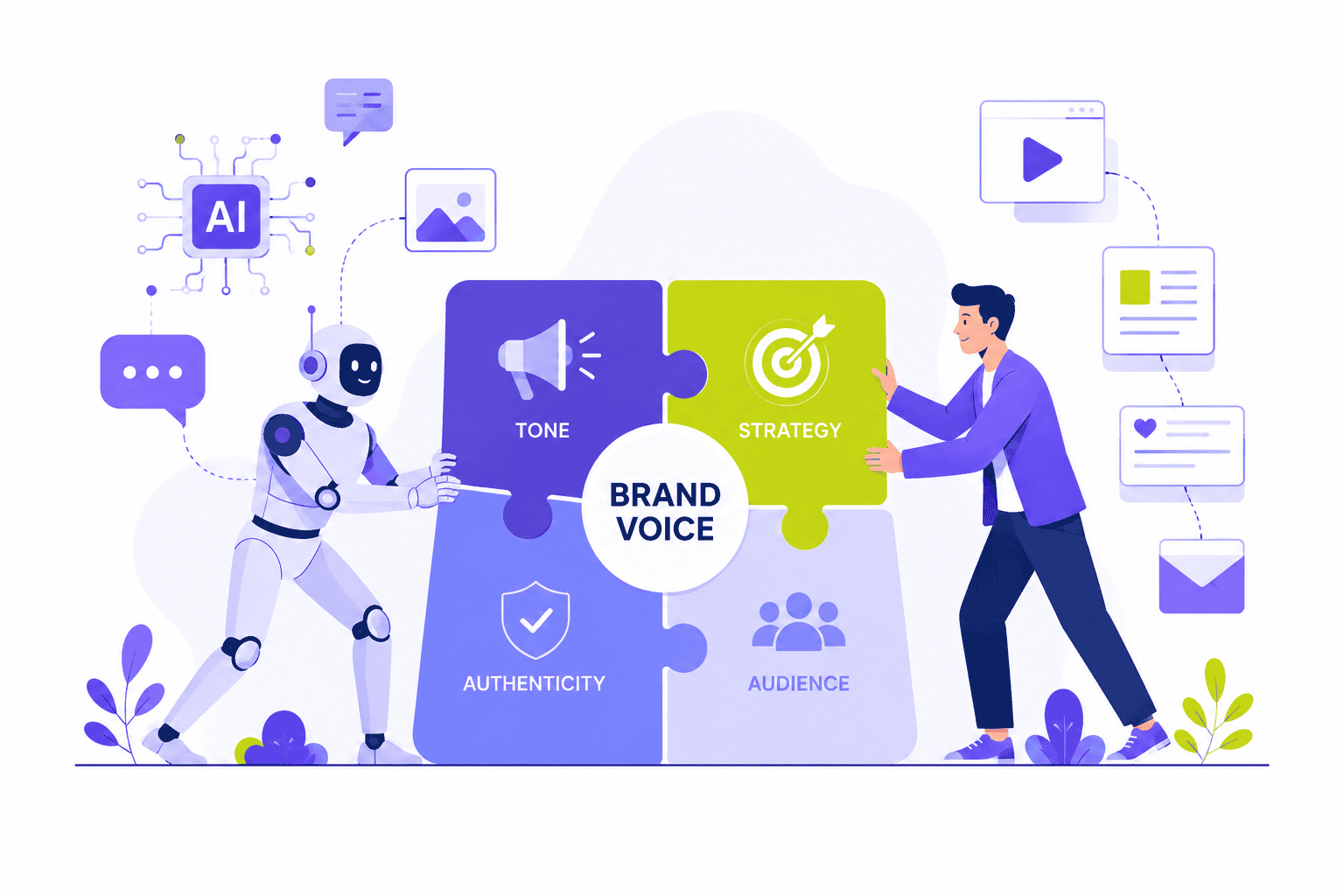
Artificial Intelligence is transforming the way businesses create content, manage campaigns, and communicate with audiences. From generating blog ideas and social media captions to producing videos and marketing assets, AI has become an important tool for modern brands. However, as more businesses adopt AI, a new challenge is emerging. How can brands use AI efficiently without sounding generic, robotic, or disconnected from their identity? The answer lies in maintaining a strong brand voice. While AI can support content creation, businesses must ensure their communication remains authentic, consistent, and aligned with their values. AI can create content faster. Your brand voice is what makes that content meaningful. Why Brand Voice Matters More Than Ever A brand voice is the unique personality and communication style that helps audiences recognize and connect with a business. It influences how brands speak across websites, social media, videos, campaigns, and customer interactions. In a digital environment increasingly filled with AI-generated content, a consistent brand voice becomes a powerful differentiator. At ThinkLab Communications , we believe that strong brands are built through consistent communication, not just content production. Builds audience trust Strengthens brand recognition Creates emotional connection Improves communication consistency Supports long-term brand growth 💡 Insight: Customers remember how a brand communicates long before they remember the tools used to create the content. The Risk of Relying Too Heavily on AI AI can generate content quickly, but speed does not always equal quality. Many businesses make the mistake of publishing AI-generated content without editing, refining, or aligning it with their brand guidelines. This often leads to content that feels generic and lacks personality. Audiences can quickly recognize when content feels disconnected from a brand’s identity. Inconsistent messaging Loss of brand personality Reduced audience trust Generic communication Weaker brand differentiation The goal is not to sound like AI. The goal is to use AI while still sounding like your brand. How Businesses Can Use AI Effectively The most successful businesses treat AI as a support tool rather than a replacement for strategy and creativity. AI works best when it helps teams improve efficiency while human expertise guides the final communication. Businesses can use AI for: Content research Content planning Idea generation Content optimization Workflow automation However, brand messaging, storytelling, creative direction, and communication strategy should always involve human oversight. This is why businesses increasingly combine AI tools with communication strategies that keep messaging aligned with brand values. Why Human Creativity Still Matters AI can analyze data and generate content patterns, but it cannot fully understand human emotion, cultural context, or brand nuance. The strongest campaigns are still built through creativity, strategic thinking, and audience understanding. This is especially important in areas such as storytelling, video production, branding, and audience engagement. Businesses investing in video production and AI production often achieve the best results when technology and creativity work together. Technology can improve communication. Authenticity is what makes people care. Maintaining Consistency Across Platforms One of the biggest challenges businesses face is maintaining a consistent brand voice across websites, blogs, videos, social media, and digital campaigns. A clear content strategy helps ensure that every piece of communication feels connected regardless of the platform. Brands that maintain consistency are often more memorable and trusted by their audiences. This is why content strategy and brand guidelines remain essential even when AI tools are part of the workflow. AI should enhance your brand voice, not replace it. The businesses that succeed with AI are the ones that combine technology with strategy, creativity, and authentic communication. Conclusion AI is creating exciting opportunities for businesses to improve efficiency and scale content creation. However, long-term success depends on maintaining a strong and recognizable brand voice. The most effective brands use AI as a tool while keeping strategy, creativity, and human communication at the center of every interaction. If you are exploring how AI can support your communication goals, explore our recent work or start a conversation .

Why Businesses Need a Content Strategy Before Creating Content
Many businesses create content because they know they need to stay active online. They publish social media posts, write blogs, produce videos, and launch campaigns hoping to increase visibility and engagement. However, without a clear plan, much of that content fails to deliver meaningful business results. Creating content without strategy is like starting a journey without knowing the destination. While activity may increase, growth often remains inconsistent and difficult to measure. In 2026, successful brands are no longer focusing on content quantity alone. Instead, they are investing in content strategy to ensure every piece of content supports business objectives, audience needs, and long-term brand growth. Content without strategy creates noise. Content with strategy creates results. What Is a Content Strategy? A content strategy is a structured plan that defines why content is being created, who it is for, where it will be distributed, and how it supports business goals. Instead of creating content randomly, a strategy ensures that every blog, video, social media post, and campaign serves a clear purpose. At ThinkLab Communications , content strategy is an essential part of building effective communication that connects brands with the right audiences. Defines clear business objectives Identifies target audiences Creates consistent messaging Supports brand positioning Improves content performance 💡 Insight: The most successful content is not created first. The strategy behind it comes first. The Problem With Creating Content Without a Strategy Many businesses focus on content production before understanding what they want the content to achieve. As a result, they often face common challenges such as inconsistent messaging, low engagement, weak audience connection, and poor return on investment. Without a strategy, content can quickly become reactive rather than purposeful. Inconsistent brand messaging Poor audience engagement Difficulty measuring results Lack of content direction Wasted marketing resources The problem is rarely the content itself. The problem is usually the lack of a clear strategy behind it. How Strategy Improves Content Performance A strong content strategy ensures that every piece of content contributes to a larger business objective. Instead of creating content simply to stay active online, businesses can create content that educates, engages, builds trust, and supports growth. Brands that combine strategy with content creation often see stronger results across digital channels. This is particularly important for businesses investing in social media marketing , where consistency and audience relevance directly impact performance. Why Content Strategy Matters for Video Content Video remains one of the most powerful communication tools available to brands today. However, producing videos without a clear strategy often leads to content that looks impressive but fails to achieve meaningful outcomes. A strategic approach helps businesses understand what message needs to be communicated, who the audience is, and what action viewers should take after watching. This is why successful brands combine content planning with video production services to maximize communication impact. Understanding Your Audience Comes First Every effective content strategy starts with audience understanding. Before creating content, businesses need to understand who they are speaking to, what challenges their audience faces, and what type of information they find valuable. The better brands understand their audience, the easier it becomes to create content that feels relevant and engaging. This audience-first approach is also a key part of successful branding strategies . Good content speaks. Great content listens first. Content Strategy Creates Consistency Consistency is one of the biggest advantages of having a content strategy. Whether a customer discovers your business through a website, social media platform, video campaign, or blog article, the message should feel connected and aligned. Consistent communication helps strengthen trust, improve brand recognition, and create a better audience experience. Businesses that maintain consistent communication often build stronger long-term relationships with customers. The Growing Role of AI in Content Strategy AI tools are helping brands create content faster than ever before. However, technology alone cannot replace strategic thinking. The most effective brands are using AI to improve efficiency while keeping strategy, creativity, and audience understanding at the center of their content efforts. Our AI Production solutions help businesses combine innovation with strategic communication to create more effective digital experiences. Content creation should never be the first step. Understanding your audience, goals, and communication strategy should always come first. Conclusion Creating content without a strategy often leads to inconsistent results and missed opportunities. A clear content strategy provides direction, improves communication, and ensures every piece of content contributes to business growth. Whether your focus is social media, video production, branding, or digital marketing, strategy should always come before execution. If you are looking to create content that supports long-term business objectives, explore our recent work or start a conversation .

Shopify vs WordPress vs Custom Development
Choosing the right website platform has become one of the most important decisions for modern businesses. A website is no longer just an online presence — it directly impacts branding, user experience, SEO performance, scalability, and long-term business growth. Today, most businesses choose between Shopify, WordPress, or fully custom website development depending on their goals and requirements. Each platform offers different advantages, limitations, and levels of flexibility. The right choice depends on your business model, growth plans, content strategy, and branding needs. The best website platform is not the most popular one — it is the one that fits your business goals. Understanding the Difference Between Shopify, WordPress, and Custom Development Before choosing a platform, it is important to understand what each solution is designed for. Shopify is mainly focused on eCommerce businesses and online stores. WordPress offers flexibility for content-driven websites and business websites, while custom development provides complete freedom for brands that need advanced functionality and unique digital experiences. At ThinkLab Communications , businesses often ask which platform is best for branding, scalability, SEO, and future growth. Shopify → Best for fast eCommerce setup WordPress → Best for flexibility and content-driven websites Custom Development → Best for scalability and unique business requirements 💡 Insight: Choosing a website platform should depend on long-term business goals, not just short-term convenience. Why Many Businesses Choose Shopify Shopify has become one of the most popular eCommerce platforms because it allows businesses to launch online stores quickly and manage products easily. For startups and small businesses, Shopify provides: Easy store management Built-in payment systems Fast setup process Reliable hosting and security Simple inventory management However, as businesses grow, some brands begin to face limitations related to advanced customization, flexibility, and performance optimization. This is why many growing brands eventually look for more flexible solutions that support stronger branding and unique user experiences. Businesses focused heavily on branding often combine Shopify with strong design and branding strategies to stand out in competitive markets. A fast website launch is important, but long-term flexibility matters even more. Why Businesses Still Prefer WordPress WordPress continues to power a large percentage of websites globally because of its flexibility and content management capabilities. Unlike Shopify, WordPress is not limited to eCommerce. Businesses can build: Corporate websites Blogs and media platforms Portfolio websites Service-based business websites Custom eCommerce experiences WordPress also offers strong SEO flexibility, making it a preferred option for businesses focused on content marketing and organic traffic growth. Many businesses working on long-term digital visibility integrate WordPress with communication strategies and content-driven branding. However, WordPress websites often require better maintenance, plugin management, and performance optimization compared to fully hosted platforms like Shopify. Why Custom Development Is Growing Fast Custom website development gives businesses complete control over design, performance, functionality, and scalability. Unlike template-based platforms, custom development allows brands to create unique digital experiences tailored specifically to their business goals. This is becoming increasingly important for businesses that require: Advanced integrations Scalable infrastructure Unique branding experiences Custom dashboards or portals High-performance web applications Custom development also allows businesses to improve loading speed, SEO structure, and user experience without being limited by themes or third-party plugin restrictions. Modern businesses increasingly combine custom development with AI-driven digital experiences and advanced communication strategies to create stronger online engagement. Templates can help businesses start quickly. Custom development helps businesses scale without limitations. Which Platform Is Best for SEO? SEO performance depends more on website structure, speed, content quality, and user experience than the platform itself. However, WordPress and custom-developed websites usually offer more technical SEO flexibility compared to closed platforms. Businesses that invest in strong website structure, optimized performance, and high-quality content often achieve better long-term visibility regardless of the platform they choose. According to Google Search Central , website performance and user experience continue to play a major role in search rankings. The right platform should support both business growth and customer experience. A visually attractive website means very little if it cannot scale, perform, or communicate effectively. Conclusion Shopify, WordPress, and custom development all offer different advantages depending on the needs of a business. Shopify is ideal for fast eCommerce setup, WordPress provides flexibility and strong content management, while custom development offers scalability and complete creative control. The best choice depends on your business goals, branding strategy, growth plans, and digital requirements. If you are planning your next website project, explore our recent work or start a conversation .

Why Corporate Storytelling Matters More Than Advertising in 2026
Advertising is everywhere today. People see ads while scrolling social media, watching videos, browsing websites, and even checking emails. Because of this, audiences have become better at ignoring traditional advertising. In 2026, brands are realizing that simply promoting products is no longer enough. People want to connect with businesses that feel real, human, and relatable. This is why corporate storytelling has become more important than traditional advertising. Storytelling helps brands create emotional connection instead of just visibility. It allows businesses to communicate values, purpose, and identity in a way audiences actually remember. People may forget advertisements, but they remember stories that make them feel something. What Is Corporate Storytelling? Corporate storytelling is the way brands communicate through experiences, emotions, values, and meaningful narratives instead of direct sales-focused messaging. Instead of constantly promoting products or services, storytelling helps businesses build trust and stronger audience relationships. Today, storytelling can be seen across: Brand videos Social media campaigns Founder stories Customer success stories Corporate documentaries Website content and communication 💡 Insight: Modern audiences connect more with authentic stories than promotional messaging. Why Traditional Advertising Is Losing Impact Consumers today are exposed to thousands of advertisements every day. Because of this overload, people have naturally become less responsive to traditional advertising formats. Most audiences now skip ads automatically unless the content feels useful, emotional, or relevant. Brands that focus only on selling often struggle to maintain attention, while businesses that communicate through stories create stronger emotional engagement. According to Forbes , emotional connection plays a major role in customer loyalty and purchasing decisions. People trust brands that communicate like humans, not corporations. How Storytelling Builds Stronger Brands Strong brands are built through consistency, emotion, and trust. Storytelling helps businesses create all three. When brands share real experiences and meaningful narratives, audiences begin to connect emotionally with the business. This emotional connection increases trust and improves long-term brand recall. At ThinkLab Communications , storytelling plays an important role across branding, communication strategies, and digital campaigns. Businesses that invest in storytelling often see: Stronger audience engagement Better brand recall Higher customer trust Improved communication consistency Long-term audience relationships Why Video Storytelling Is Growing Fast Video content continues to dominate digital platforms in 2026, but audiences now expect more than just attractive visuals. Brands are increasingly focusing on storytelling-led video production services that combine visuals with meaningful communication. A visually impressive video without clear storytelling may look good, but it often fails to create real engagement or emotional impact. Storytelling gives structure to video content and helps audiences understand the message more clearly. Good visuals attract attention. Strong storytelling creates connection. Why Storytelling Matters in Dubai’s Competitive Market Dubai has become one of the most competitive business markets in the region. Businesses across healthcare, technology, hospitality, luxury, and real estate are all competing for audience attention. This is why strong communication and storytelling are becoming essential for modern brands. Companies that invest in communication strategy and storytelling-driven branding are often able to stand out more effectively in crowded markets. At ThinkLab Communications , storytelling is integrated into branding, campaigns, digital communication, and audience engagement strategies. Modern branding is no longer about selling louder. It is about communicating better, building trust, and creating emotional connection. AI Content Is Growing — But Human Stories Still Matter AI tools are changing how brands create content, but audiences still connect most with authenticity and human emotion. While automation can improve speed and efficiency, storytelling still requires emotional understanding and creative direction. This is why many businesses are now combining AI tools with creative storytelling and strategic communication. Our AI Production solutions help brands combine technology with creative storytelling to create more engaging digital content. Conclusion In 2026, audiences are looking for brands that feel authentic, relatable, and emotionally engaging. Traditional advertising still has value, but storytelling is what helps businesses build lasting audience relationships. Brands that focus on storytelling create stronger communication, better engagement, and deeper trust with their audiences. If you want to create more meaningful communication for your brand, explore our recent work or start a conversation .

Why Most Brand Videos Fail
Many brands invest in video production expecting strong engagement and results — but most brand videos fail to deliver real impact. The issue is not production quality, budget, or platforms. The real problem is lack of clear storytelling. Without a strong narrative, even high-quality videos struggle to connect with audiences. Brands that focus on storytelling create videos that are memorable, engaging, and aligned with business goals. Most brand videos don’t fail because of production — they fail because they don’t communicate clearly. Why Most Brand Videos Fail Understanding why brand videos fail is the first step toward creating better content. Many businesses focus on visuals but overlook communication and structure. No clear message or objective Too much focus on visuals over narrative Lack of audience understanding Inconsistent brand communication No strategy for distribution or platforms 💡 Insight: High-quality visuals without a clear message often create confusion instead of impact. The Role of Storytelling in Video Success Storytelling gives structure to video content. It helps brands communicate clearly, guide the audience, and create emotional connection. Instead of random visuals, storytelling builds a meaningful flow from start to finish. Brands that work with video production services combined with storytelling strategy see better engagement and stronger communication results. Storytelling is what turns content into communication and visuals into meaning. What Effective Brand Videos Do Differently Start with a clear objective Focus on audience needs Follow a structured narrative Maintain brand consistency Adapt content for multiple platforms Storytelling + Strategy = Better Results The most effective brand videos combine storytelling with strategy. This ensures that every piece of content is aligned with business goals and audience expectations. Many brands also integrate storytelling into communication strategy to maintain consistency across campaigns. A good video looks great. A strong story makes it work. Struggling with video performance? Most brands don’t have a video problem — they have a storytelling problem. Why This Matters for Brands in Dubai In competitive markets like Dubai, brands need more than just visually appealing videos. Clear communication, storytelling, and strategy are essential to stand out and connect with audiences. Conclusion Most brand videos fail not because of poor production, but because of weak storytelling. Brands that invest in narrative, clarity, and structure create videos that deliver real results. If you are looking to improve your video content strategy, you can start a conversation .

Why AI Filmmaking Is Transforming Advertising in 2026
AI filmmaking is rapidly becoming one of the most influential shifts in modern advertising. In 2026, brands are no longer asking whether to use AI in video production — they are asking how to use it effectively to move faster, scale content, and stay competitive. From concept creation to final delivery, AI video production is changing how advertising films are developed, produced, and distributed across platforms. Why AI Filmmaking Is Growing So Fast The demand for content has increased dramatically. Brands now need multiple videos for different platforms, audiences, and formats. Traditional production alone cannot keep up with this speed and scale. AI filmmaking enables faster production cycles, allowing brands to create, test, and optimize content continuously while maintaining consistency across campaigns. Speed, Scale, and Creative Flexibility AI production introduces a new level of flexibility in commercial filmmaking. Instead of producing one final film, brands can now generate multiple versions tailored to different audiences and platforms. Rapid concept generation Multiple content variations Faster editing and iteration Scalable campaign production AI + Human Creativity = Stronger Results AI does not replace creativity — it enhances it. Creative teams use AI to explore ideas quickly, visualize concepts, and refine outputs, while human direction ensures storytelling, emotion, and brand alignment remain strong. The most effective advertising films combine AI efficiency with human creative thinking and video production expertise. AI filmmaking is not about replacing production — it is about expanding creative possibilities at scale. Where Brands Are Using AI Filmmaking AI video production is being used across industries and campaign types, especially where speed and adaptability are critical. Social media campaigns Product launches Performance marketing ads Concept visualisation Localized content for different markets AI Filmmaking in Dubai and the Middle East Dubai is emerging as a hub for AI-driven creative production. Brands in the region are adopting AI filmmaking to stay ahead in a competitive market where speed, quality, and innovation define success. Many businesses are now combining AI with branding and design systems to create more consistent and scalable campaigns. Conclusion AI filmmaking is not just a trend — it is a fundamental shift in how advertising films are created. Brands that adopt AI video production gain the ability to move faster, experiment more, and deliver content that performs across platforms. According to Adobe’s AI filmmaking case study , generative AI is helping filmmakers explore new creative possibilities, speed up production workflows, and scale storytelling in ways not possible before. If you are exploring AI filmmaking for your brand, you can start a conversation .