
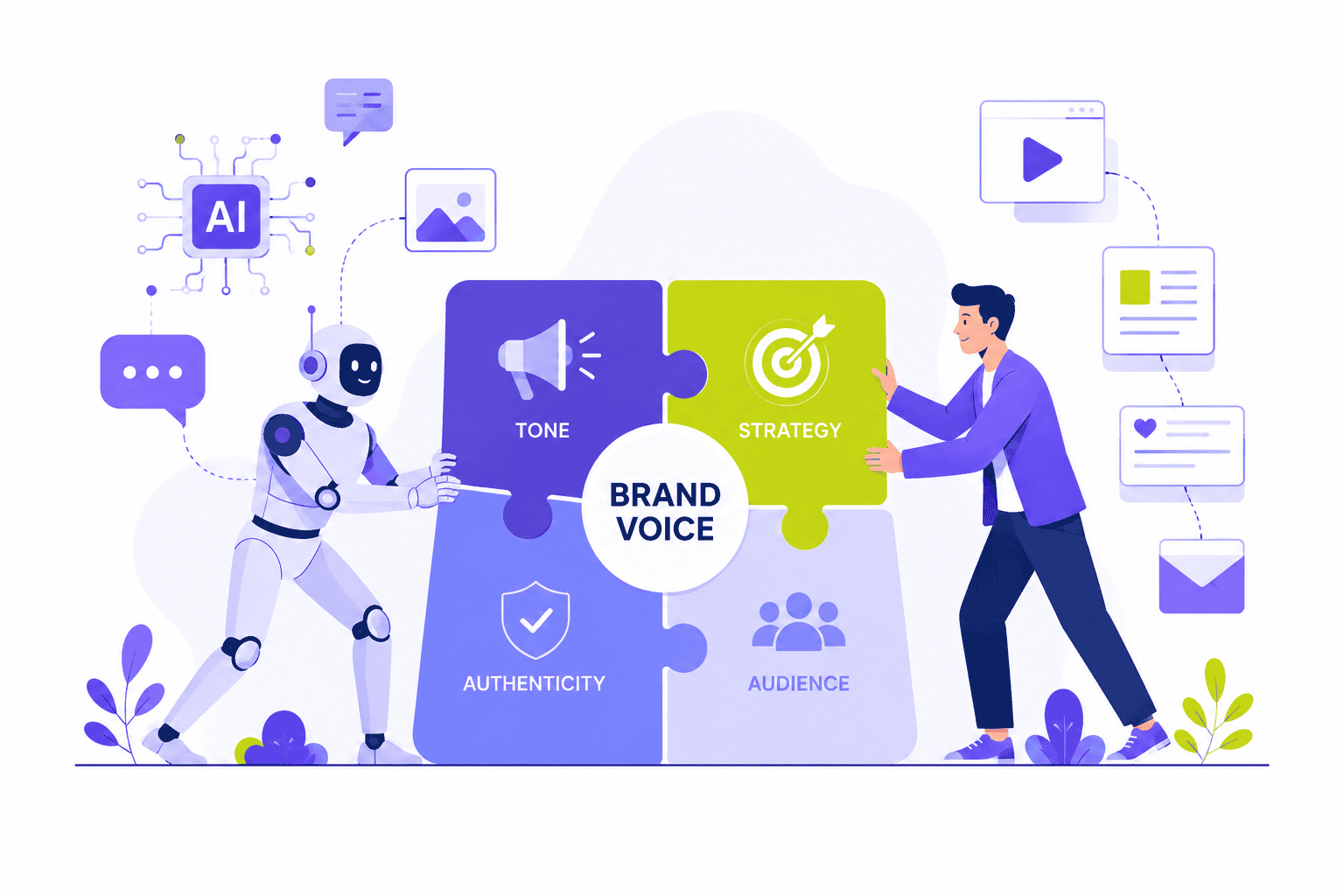
How Businesses Can Use AI Without Losing Their Brand Voice
Artificial Intelligence is transforming the way businesses create content, manage campaigns, and communicate with audiences. From generating blog ideas and social media captions to producing videos and marketing assets, AI has become an important tool for modern brands. However, as more businesses adopt AI, a new challenge is emerging. How can brands use AI efficiently without sounding generic, robotic, or disconnected from their identity? The answer lies in maintaining a strong brand voice. While AI can support content creation, businesses must ensure their communication remains authentic, consistent, and aligned with their values. AI can create content faster. Your brand voice is what makes that content meaningful. Why Brand Voice Matters More Than Ever A brand voice is the unique personality and communication style that helps audiences recognize and connect with a business. It influences how brands speak across websites, social media, videos, campaigns, and customer interactions. In a digital environment increasingly filled with AI-generated content, a consistent brand voice becomes a powerful differentiator. At ThinkLab Communications , we believe that strong brands are built through consistent communication, not just content production. Builds audience trust Strengthens brand recognition Creates emotional connection Improves communication consistency Supports long-term brand growth 💡 Insight: Customers remember how a brand communicates long before they remember the tools used to create the content. The Risk of Relying Too Heavily on AI AI can generate content quickly, but speed does not always equal quality. Many businesses make the mistake of publishing AI-generated content without editing, refining, or aligning it with their brand guidelines. This often leads to content that feels generic and lacks personality. Audiences can quickly recognize when content feels disconnected from a brand’s identity. Inconsistent messaging Loss of brand personality Reduced audience trust Generic communication Weaker brand differentiation The goal is not to sound like AI. The goal is to use AI while still sounding like your brand. How Businesses Can Use AI Effectively The most successful businesses treat AI as a support tool rather than a replacement for strategy and creativity. AI works best when it helps teams improve efficiency while human expertise guides the final communication. Businesses can use AI for: Content research Content planning Idea generation Content optimization Workflow automation However, brand messaging, storytelling, creative direction, and communication strategy should always involve human oversight. This is why businesses increasingly combine AI tools with communication strategies that keep messaging aligned with brand values. Why Human Creativity Still Matters AI can analyze data and generate content patterns, but it cannot fully understand human emotion, cultural context, or brand nuance. The strongest campaigns are still built through creativity, strategic thinking, and audience understanding. This is especially important in areas such as storytelling, video production, branding, and audience engagement. Businesses investing in video production and AI production often achieve the best results when technology and creativity work together. Technology can improve communication. Authenticity is what makes people care. Maintaining Consistency Across Platforms One of the biggest challenges businesses face is maintaining a consistent brand voice across websites, blogs, videos, social media, and digital campaigns. A clear content strategy helps ensure that every piece of communication feels connected regardless of the platform. Brands that maintain consistency are often more memorable and trusted by their audiences. This is why content strategy and brand guidelines remain essential even when AI tools are part of the workflow. AI should enhance your brand voice, not replace it. The businesses that succeed with AI are the ones that combine technology with strategy, creativity, and authentic communication. Conclusion AI is creating exciting opportunities for businesses to improve efficiency and scale content creation. However, long-term success depends on maintaining a strong and recognizable brand voice. The most effective brands use AI as a tool while keeping strategy, creativity, and human communication at the center of every interaction. If you are exploring how AI can support your communication goals, explore our recent work or start a conversation .

Why Businesses Need a Content Strategy Before Creating Content
Many businesses create content because they know they need to stay active online. They publish social media posts, write blogs, produce videos, and launch campaigns hoping to increase visibility and engagement. However, without a clear plan, much of that content fails to deliver meaningful business results. Creating content without strategy is like starting a journey without knowing the destination. While activity may increase, growth often remains inconsistent and difficult to measure. In 2026, successful brands are no longer focusing on content quantity alone. Instead, they are investing in content strategy to ensure every piece of content supports business objectives, audience needs, and long-term brand growth. Content without strategy creates noise. Content with strategy creates results. What Is a Content Strategy? A content strategy is a structured plan that defines why content is being created, who it is for, where it will be distributed, and how it supports business goals. Instead of creating content randomly, a strategy ensures that every blog, video, social media post, and campaign serves a clear purpose. At ThinkLab Communications , content strategy is an essential part of building effective communication that connects brands with the right audiences. Defines clear business objectives Identifies target audiences Creates consistent messaging Supports brand positioning Improves content performance 💡 Insight: The most successful content is not created first. The strategy behind it comes first. The Problem With Creating Content Without a Strategy Many businesses focus on content production before understanding what they want the content to achieve. As a result, they often face common challenges such as inconsistent messaging, low engagement, weak audience connection, and poor return on investment. Without a strategy, content can quickly become reactive rather than purposeful. Inconsistent brand messaging Poor audience engagement Difficulty measuring results Lack of content direction Wasted marketing resources The problem is rarely the content itself. The problem is usually the lack of a clear strategy behind it. How Strategy Improves Content Performance A strong content strategy ensures that every piece of content contributes to a larger business objective. Instead of creating content simply to stay active online, businesses can create content that educates, engages, builds trust, and supports growth. Brands that combine strategy with content creation often see stronger results across digital channels. This is particularly important for businesses investing in social media marketing , where consistency and audience relevance directly impact performance. Why Content Strategy Matters for Video Content Video remains one of the most powerful communication tools available to brands today. However, producing videos without a clear strategy often leads to content that looks impressive but fails to achieve meaningful outcomes. A strategic approach helps businesses understand what message needs to be communicated, who the audience is, and what action viewers should take after watching. This is why successful brands combine content planning with video production services to maximize communication impact. Understanding Your Audience Comes First Every effective content strategy starts with audience understanding. Before creating content, businesses need to understand who they are speaking to, what challenges their audience faces, and what type of information they find valuable. The better brands understand their audience, the easier it becomes to create content that feels relevant and engaging. This audience-first approach is also a key part of successful branding strategies . Good content speaks. Great content listens first. Content Strategy Creates Consistency Consistency is one of the biggest advantages of having a content strategy. Whether a customer discovers your business through a website, social media platform, video campaign, or blog article, the message should feel connected and aligned. Consistent communication helps strengthen trust, improve brand recognition, and create a better audience experience. Businesses that maintain consistent communication often build stronger long-term relationships with customers. The Growing Role of AI in Content Strategy AI tools are helping brands create content faster than ever before. However, technology alone cannot replace strategic thinking. The most effective brands are using AI to improve efficiency while keeping strategy, creativity, and audience understanding at the center of their content efforts. Our AI Production solutions help businesses combine innovation with strategic communication to create more effective digital experiences. Content creation should never be the first step. Understanding your audience, goals, and communication strategy should always come first. Conclusion Creating content without a strategy often leads to inconsistent results and missed opportunities. A clear content strategy provides direction, improves communication, and ensures every piece of content contributes to business growth. Whether your focus is social media, video production, branding, or digital marketing, strategy should always come before execution. If you are looking to create content that supports long-term business objectives, explore our recent work or start a conversation .

Why Corporate Storytelling Matters More Than Advertising in 2026
Advertising is everywhere today. People see ads while scrolling social media, watching videos, browsing websites, and even checking emails. Because of this, audiences have become better at ignoring traditional advertising. In 2026, brands are realizing that simply promoting products is no longer enough. People want to connect with businesses that feel real, human, and relatable. This is why corporate storytelling has become more important than traditional advertising. Storytelling helps brands create emotional connection instead of just visibility. It allows businesses to communicate values, purpose, and identity in a way audiences actually remember. People may forget advertisements, but they remember stories that make them feel something. What Is Corporate Storytelling? Corporate storytelling is the way brands communicate through experiences, emotions, values, and meaningful narratives instead of direct sales-focused messaging. Instead of constantly promoting products or services, storytelling helps businesses build trust and stronger audience relationships. Today, storytelling can be seen across: Brand videos Social media campaigns Founder stories Customer success stories Corporate documentaries Website content and communication 💡 Insight: Modern audiences connect more with authentic stories than promotional messaging. Why Traditional Advertising Is Losing Impact Consumers today are exposed to thousands of advertisements every day. Because of this overload, people have naturally become less responsive to traditional advertising formats. Most audiences now skip ads automatically unless the content feels useful, emotional, or relevant. Brands that focus only on selling often struggle to maintain attention, while businesses that communicate through stories create stronger emotional engagement. According to Forbes , emotional connection plays a major role in customer loyalty and purchasing decisions. People trust brands that communicate like humans, not corporations. How Storytelling Builds Stronger Brands Strong brands are built through consistency, emotion, and trust. Storytelling helps businesses create all three. When brands share real experiences and meaningful narratives, audiences begin to connect emotionally with the business. This emotional connection increases trust and improves long-term brand recall. At ThinkLab Communications , storytelling plays an important role across branding, communication strategies, and digital campaigns. Businesses that invest in storytelling often see: Stronger audience engagement Better brand recall Higher customer trust Improved communication consistency Long-term audience relationships Why Video Storytelling Is Growing Fast Video content continues to dominate digital platforms in 2026, but audiences now expect more than just attractive visuals. Brands are increasingly focusing on storytelling-led video production services that combine visuals with meaningful communication. A visually impressive video without clear storytelling may look good, but it often fails to create real engagement or emotional impact. Storytelling gives structure to video content and helps audiences understand the message more clearly. Good visuals attract attention. Strong storytelling creates connection. Why Storytelling Matters in Dubai’s Competitive Market Dubai has become one of the most competitive business markets in the region. Businesses across healthcare, technology, hospitality, luxury, and real estate are all competing for audience attention. This is why strong communication and storytelling are becoming essential for modern brands. Companies that invest in communication strategy and storytelling-driven branding are often able to stand out more effectively in crowded markets. At ThinkLab Communications , storytelling is integrated into branding, campaigns, digital communication, and audience engagement strategies. Modern branding is no longer about selling louder. It is about communicating better, building trust, and creating emotional connection. AI Content Is Growing — But Human Stories Still Matter AI tools are changing how brands create content, but audiences still connect most with authenticity and human emotion. While automation can improve speed and efficiency, storytelling still requires emotional understanding and creative direction. This is why many businesses are now combining AI tools with creative storytelling and strategic communication. Our AI Production solutions help brands combine technology with creative storytelling to create more engaging digital content. Conclusion In 2026, audiences are looking for brands that feel authentic, relatable, and emotionally engaging. Traditional advertising still has value, but storytelling is what helps businesses build lasting audience relationships. Brands that focus on storytelling create stronger communication, better engagement, and deeper trust with their audiences. If you want to create more meaningful communication for your brand, explore our recent work or start a conversation .

Why Most Brand Videos Fail
Many brands invest in video production expecting strong engagement and results — but most brand videos fail to deliver real impact. The issue is not production quality, budget, or platforms. The real problem is lack of clear storytelling. Without a strong narrative, even high-quality videos struggle to connect with audiences. Brands that focus on storytelling create videos that are memorable, engaging, and aligned with business goals. Most brand videos don’t fail because of production — they fail because they don’t communicate clearly. Why Most Brand Videos Fail Understanding why brand videos fail is the first step toward creating better content. Many businesses focus on visuals but overlook communication and structure. No clear message or objective Too much focus on visuals over narrative Lack of audience understanding Inconsistent brand communication No strategy for distribution or platforms 💡 Insight: High-quality visuals without a clear message often create confusion instead of impact. The Role of Storytelling in Video Success Storytelling gives structure to video content. It helps brands communicate clearly, guide the audience, and create emotional connection. Instead of random visuals, storytelling builds a meaningful flow from start to finish. Brands that work with video production services combined with storytelling strategy see better engagement and stronger communication results. Storytelling is what turns content into communication and visuals into meaning. What Effective Brand Videos Do Differently Start with a clear objective Focus on audience needs Follow a structured narrative Maintain brand consistency Adapt content for multiple platforms Storytelling + Strategy = Better Results The most effective brand videos combine storytelling with strategy. This ensures that every piece of content is aligned with business goals and audience expectations. Many brands also integrate storytelling into communication strategy to maintain consistency across campaigns. A good video looks great. A strong story makes it work. Struggling with video performance? Most brands don’t have a video problem — they have a storytelling problem. Why This Matters for Brands in Dubai In competitive markets like Dubai, brands need more than just visually appealing videos. Clear communication, storytelling, and strategy are essential to stand out and connect with audiences. Conclusion Most brand videos fail not because of poor production, but because of weak storytelling. Brands that invest in narrative, clarity, and structure create videos that deliver real results. If you are looking to improve your video content strategy, you can start a conversation .